
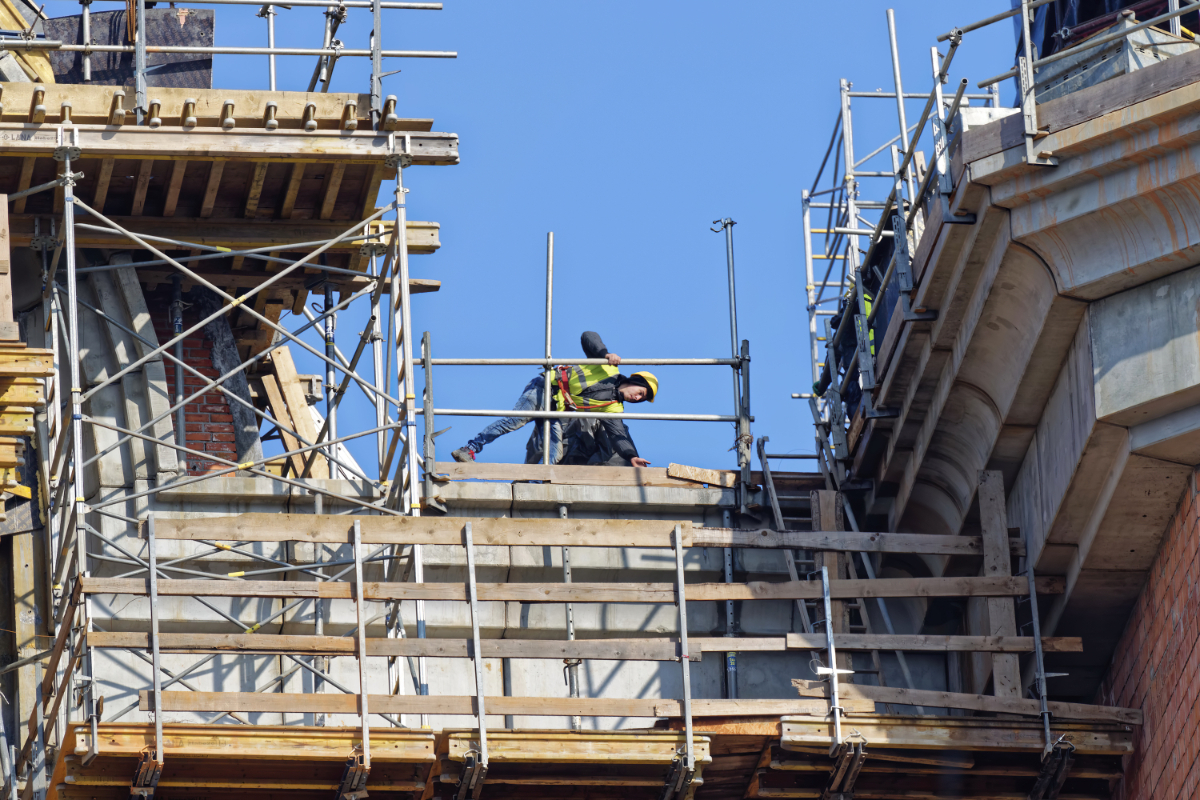
Read our construction site working at heights safety checklist. If you are considering a job where working at height is required, this is what you ned to know.
Measures to reduce the risk Working at height
Firstly, it is important to assess the risks present. Some of the most important factors are the height at which work is being done, the duration of the work, the frequency of the work and the condition of the surfaces being used.
Where it is reasonably possible to do so, working from height should be avoided. In situations where work needs to be conducted at height, preventing falls can be done by using the right equipment, ideally if it already exists and is safe.
SAFETY TIPS FOR WORKING AT HEIGHTS
Another important aspect is not only to reduce the chance of falls but the lethality and consequences of them also. This can be done by using the right equipment when risk cannot be eliminated. Every step should have its risks considered and prioritise collective protection as opposed to personal protection.
What is Working At Height Risk Assessment?
Working at height risk assessments involve spotting and evaluating hazards and risks that either are present or could occur when working above ground level. It needs to be carried out from both a moral and legal standpoint, as it allows for preventative measures to be taken against the risks associated with working at height.
The entire list of what working at height risk assessments involve Identifying hazards, evaluation of risks, deciding on control or protective measures, documenting and outlining the findings, review and update on a regular basis, as well as needing to be redone if an incident occurs.
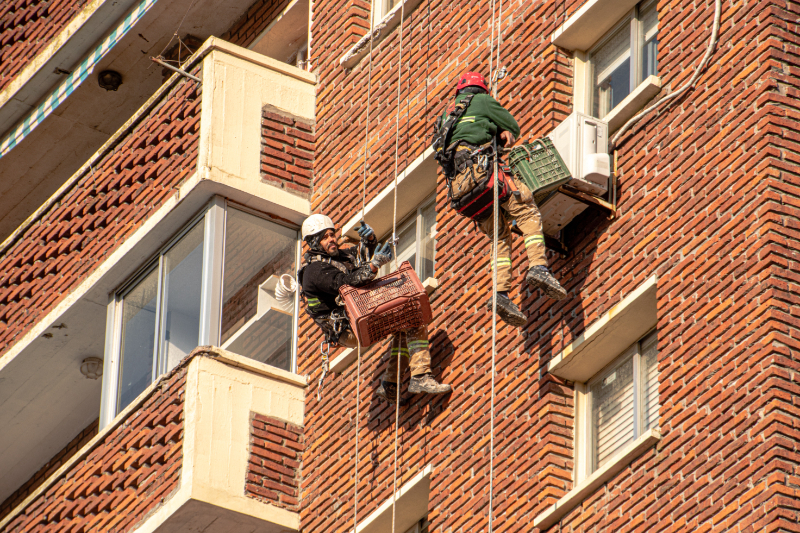
General Safety Tips for Working at Height
Working at heights should be avoided wherever possible.
Existing safe places of work should be prioritised to be used.
The right equipment should always be used, via minimising fall distances and thus consequences.
Use quality PPE equipment that is inspected regularly.
Always using rails and fall protection barriers, which should be fitted..
Being aware and considering distances, never overloading or overreaching.
Always find and use the best anchor point to support you and your equipment.
Using the optimal gear and equipment when working at height, often based upon the risk assessment.
Being mindful and using emergency and rescue procedures as soon as they are needed.
Training of team members to be knowledgeable and safety conscious of the dangers and how to minimise them.
Working At Heights Safety Checklist
Suppose any of the below isn't applicable. In that case, it means that health and safety may be compromised, and additional measures may need to be taken in order to ensure the prevention of injuries and to pass construction guidelines. The aspects relevant to the Control Measures Checklist are as follows: Planning, fragile surfaces/roofs, ladders/access equipment, open edges, racking, training, contractors and protective equipment.
You should ensure that all activities occurring at height, both routine and non-routine, are identified.
Are any employees, contractors, or members of the public at risk from work at height as previously identified? If so, who?
What is the usual frequency and duration of employees working at height, and what specific tasks are performed at what intervals?
For activities falling under work at height, are these hazards being monitored and controlled, if applicable?
Is the potential danger of an employee falling from a height controlled and considered with preventative measures in place? Is it applicable, and has the possibility of an employee falling through a fragile roof or other fragile surfaces been considered, along with identifying who could be harmed?
Have you considered falling objects, including the potential risk to employees or members of the public, and how this risk can be prevented? Have measures been implemented to prevent access equipment from slipping or collapsing?
Additionally, are there any elevated access ways that need to be addressed? If there are elevated access ways, what measures can be implemented to control slipping or tripping hazards?
Are there any instances of work at height that could have been prevented or circumvented?
Are instances of work at height being both formally planned and organised?
Has the work area been surveyed for hazards such as overhead power lines, subsidence, and moving machinery? These hazards, whether human or otherwise, must be noted to the best of your ability.
While work at height is being completed, is there a competent individual with the authority to suspend work in case of situational changes, such as weather, traffic, or a change in the scope of work?
Are fragile roofs clearly identified, with extra caution given to those where fragility is not immediately apparent? Are visible warning signs posted on the approach to fragile roofs? Is there a system in place to prevent unauthorized access to roofs or roof spaces?
Will the ladders be used solely for light work or for tasks at heights of short duration? Are ladders secured at both the top and bottom, with an inclination ratio of 1:4? Are the work platforms and access equipment capable of supporting all necessary loads, including workers, equipment, materials, and safe working loads? Are these inspected every six months for health and safety purposes?
Are all work platforms, such as tower scaffolds, cherry pickers, and scaffolding, equipped with edge protection? Are work platforms wide enough to walk on without the risk of stumbling or losing balance? If forklift trucks are being used to gain access at heights, are any necessary safety platforms properly constructed and fitted?
Is all access equipment, including portable ladders and steps, regularly inspected? Have workers been trained and understand why they should not over-reach on ladders and work platforms? Is a written log maintained, with broken or damaged access equipment removed from service? Is monitoring conducted to prevent the use of makeshift equipment?
Have all open vertical drops been identified and properly guarded while open? Are there handrails on the open side of all staircases? Are open edges, such as those on mezzanine levels, fitted with appropriate guard rails (noting that chains or ropes are not considered suitable)?
In mezzanine areas, are safe working methods being implemented during the delivery and removal of goods?
Are measures consistently taken to prevent falling objects while working at height to avoid injury to others? Is fixed edge protection provided to prevent falls in situations where working at height is unavoidable?
Has storage been properly planned to discourage individuals from climbing racking or pallets to access work-related items? Are there adequate provisions in place to allow safe access for both storing and displaying goods? Are staff trained in methods that enable them to safely access high-level racking and storage?
Have all workers who will be working at height been assessed as competent by another qualified individual or been closely supervised and observed by a competent person? Have contractors provided written procedures for working at height after being screened or instructed, with their work monitored by a competent health and safety professional?
Where the risk of falls persists and cannot be eliminated, are safety harnesses, fall arrest devices, or safety nets being used and maintained for health and safety? (Both fall arrest equipment and safety harnesses require specialized training and biannual inspections.) Additionally, anchorage points must be used for safety harnesses and ladders, with regular inspections.
If you are working on a construction project in Suffolk, Cambridgeshire, Hertfordshire, Kent or London, you will be considring the safety requirements of your workers. Follow the links below for construction site safety nets, crash bags hire and edge protection hire.
Construction Safety Net Hire London Fall Arrest Bags Hire London Edge Protection Hire London