
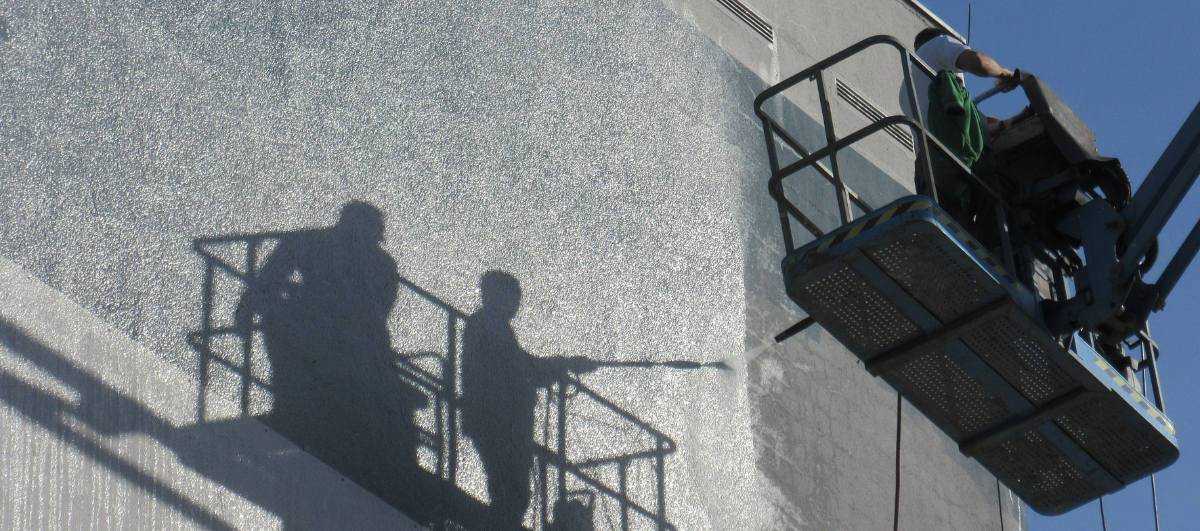
What jobs requires you to work from heights? We look at the range of jobs which require work from height and how to comply with the work at height regulations.
What is Working at Height?
Working at heights means performing jobs and tasks where there are risks of falling from great heights at stake, and therefore, many precautions and measures must take place for safety purposes. It is the job of professional employers and property owners to ensure the potential of injury is as low as possible before, after and during working hours.
You are an employee working at heights if you:
Work above the floor or ground level.
Could fall from edges through fragile surfaces or openings.
Or if your workers could experience falls from through holes in the floor.
At height, jobs do not involve trips or slips on the current level but include falling from high to lower.

Examples of Jobs Which Require Work From Height
Working at heights on top of commercial buildings or homes is still as intimidating a job as any listed afterwards. There are still numerous risks at stake, for example, when with pitched rooves as they can be challenging to work with due to the reaching distance, or when dealing with harsh weather elements such as solid winds, hailstorms, etc. height becomes an extreme difficulty.
Roofers repair and install the relevant roofs of your properties and households with various suitable tools and equipment. The devices need to be of specific stability and standard to comply with height regulations; there must be little to no danger of falling for a professional or machine operator.
Currently, many of these jobs begin as high-quality apprenticeships for around three years, and they receive training on the job to learn of the regulations.
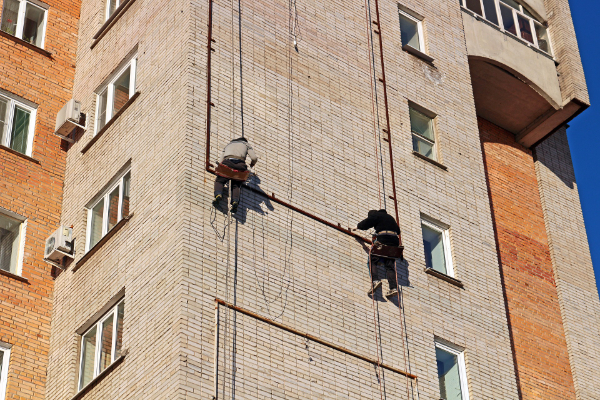
Window cleaners are regularly up ladders or sometimes on harnesses and cradle platforms that hang from ropes to wash windows on buildings, households or skyscrapers.
You don't require any formal educational training or specific qualifications or grades to become a window cleaner as most of the training is done on the job.
The job entails: The turbines we use in the modern world have, over time, doubled in size. They now reach an average height of around 328 ft tall. Those who desire to install and repair turbines must have nerves of steel and the technical skills and compliance to back that up.
These talented high-climbers perform inspections across troubleshoot malfunctions, wind farms. They do their utmost to complete and solve technical issues whilst they hang at great heights from harnesses, rappelling from ropes.
What you require: You typically have to attend technical schools to become wind turbine techs, or they must study for an associate degree and year of training on the job following. Apprenticeship programs are another route to this career.
It takes incredible fortitude and courage to become a firefighter, regardless of working at height. However, laddering up tall buildings and properties is a crucial aspect of the job.
Firefighters respond to various accidents and emergencies, but those including brush fires, buildings and households involve great heights that you must follow regulations to complete.
Firefighters often require strong high school grades or a diploma and depending on where you are located; you may need some strong college grades or credits. Then you must complete fire academy training, pass your physical and written exams and obtain an E.M.T certification (Emergency Medical Technician certificate).
Steelworkers do some of the most extreme work at heights, dangling on the sides of elevated roadways and bridges. You have to be wholly committed and unafraid to take on this job. All working at heights jobs require an understanding of the regulations, and here is most definitely no different; professionals must take all aspects seriously and with plenty of care. Employers in this field need to ensure their employees aren't at risk.
Iron and Steelworkers repair, raise and reinforce the structures from the ground up to great heights.
Steelworkers must complete years of an apprenticeship program to make their way in the industry or learn gradually on the job, taking in all the guidelines and rules. To give you an edge over other job contenders, you can pursue related certifications and reports for rigging and welding.
As a tree trimmer, you will have to become familiar with many rigging and climbing systems that will enable you to reach high enough to begin cutting away at branches to keep them from overgrowing into roadways, power lines, homes and for maintaining consistent tree health.
You will require the necessary high school grades; plenty of the training that you wish to acquire will be taught to you on the job.
The job of a glazier is to install windows onto skyscrapers and several other types of buildings. They provide those working or living inside with the best views of city skylines with their apt application. Many glaziers in the trade work on low ground, installing shops and storefronts with huge windows and aren't at risk. However, most glaziers spend time up in the air, which is why they need a thorough understanding of working at heights legislation.
You need to go through a four-year apprenticeship to gain all the necessary life and work skills to do this job.
The Job: Whilst lighting technicians do not hurl themselves hundreds of feet in the air in many cases. However, it is vital that those wishing to become techs be comfortable walking across catwalks inside large arenas and ascending tall ladders on the same day. Pros in this industry must operate lighting, install it, maintain it and repair it if things go wrong in many different locations such as concert venues or theatres, commercial buildings, hotels, event halls and even office workplaces.
You need to be aware of the regulations so that all the work you perform complies with the health and safety guidelines, significantly if you assist those rigging and performing maintenance on the lights.
What you require: Lighting technicians can begin their career after gaining an associate degree; however, it depends solely on your employer; some get by with high school grades or diplomas at entry-level.
The job entails: Piloting is one of the most prominent workings at heights professions, you will spend most of your working day around 39,000ft in the air, so you must follow the guidelines and know-how to support yourself and staff. Commercial and airline pilots spend their job transporting cargo and large amounts of people into the air on their holidays or for business trips. There are numerous specialised roles for pilots. Pilots carried private charter flights, crop dusting or aerial application services, or you may be commissioned to perform rescue flights for the government or fire fighting purposes.
What you need: Commercial pilots require high school diplomas or the equivalent of such. However, if you work for a prominent airline, you must have a bachelor's degree to begin training.
The path of your career in flying depends on garnering your commercial pilot's license from the F.A.A (Federal Aviation Administration), and it is a requirement that they become certified under the A.T.P (Airline Transport Pilots).
The job of a rock-climbing instructor is vital and holds incredible responsibility; you'll teach several adrenaline-pumped daredevils the know-how of climbing, whether it be indoor or outdoor. As an instructor, it is your job to ensure you are a safe model and example for those in your care to pass on the proper techniques of using ropes, harnesses and climbing gear for safety use.
What you require: Those that want to take on the job role of a rock-climbing instructor must take a certification course through a mountain guides association. In doing so, they can become familiar with all the necessary rules and regulations to put in place for their learners whilst on the job.
What do I need to do to comply with the Work at Height Regulations 2005?
You must comply with all Work At Height Regulations introduced in 2005 to ensure that all on-site staff are protected, and their safety is never at risk. Whether it be a busy street, a construction site, or a transportation platform, there are plenty of risks at stake that could result in injury if there aren't correctly precautions put in place.
These regulations place strict duties onto employers that control the workers who work at significant heights, such as building owners and facility managers. Professionals must perform thorough risk assessments on the equipment and material and ensure the workers and general site comply with the regulations.
Included as part of the W.A.H. Regulations, they must ensure:
Work at height activity must be organised and thoroughly planned with complete risk assessments.
Ensure that all your workers involved are competent enough to work at height.
The employer teaching and looking after the employees must be competent with quality qualifications on their backs.
Appropriate work equipment is chosen and utilised correctly, and all risks are assessed.
The dangers of working near or on high or fragile surfaces must be managed and taken care of.
The equipment that you use for heights must be maintained and inspected throughout the process.
If you are working on a construction project in Suffolk, Cambridgeshire, Hertfordshire, Kent or London, you will be considring the safety requirements of your workers. Follow the links below for construction site safety nets, crash bags hire and edge protection hire.
Construction Site Safety Nets Soft Landing Bags Hire Edge Protection Hire