

What are the safety requirements for general access scaffolds? In this article we look at OSHA Scaffolding Safety Requirements and how it affects general access scaffolding.
What is General Access Scaffolding?
General access scaffoldings involve installations of vague but high-quality, sturdy scaffold plank structures that fit each different style of construction or can be suitably adjusted to accommodate them. These construction projects and activities can be anything from small houses to towers, barns, powerhouses and even large-scale skyscrapers.
Such frame structures allow construction workers, contractors, operators, registered professional engineers, and various other professionals to direct access parts of the modernised or constructed households or buildings effectively and quickly to get work done while staying safe and ensuring lives aren't at risk.
Numerous types of scaffolds are available, for example, float scaffolds, catenary scaffolds, canopy structures, needle beam scaffolds, suspended scaffolds, ladder jack scaffolds and many more. There are also many personal fall arrest systems and methods, like debris nets, tag lines and insulated lines, suspension wire ropes, guardrail systems, harnesses, PPE, fall arrest bags, and many more that can help make scaffold platforms safer for your workers.
Many companies excel in the adjustments, installation setups and disassembly of such structures; they are readily available to find and contact when planning your building project. It's paramount to employ professional installers to carry out these jobs as they are fully experienced and qualified with the necessary know-how of the health administration, OSHA standards and working at height regulations that all employers and employees must follow and adhere to.
SAFETY REQUIREMENTS FOR GENERAL ACCESS SCAFFOLDS
When planning your specifically designed project, you may notice that you require some unavoidable work at height from your builders and professionals. However, before you begin setting up one or more catch platforms, base plates and general access scaffolds, you must ensure the following are suitable and safe for the current job.
All working platforms must be wide enough to allow your workers' sufficient access and working space, and they must be fully boarded at approximately 600mm wide.
You must get a competent person on site to check all boards are thoroughly and properly supported, ensuring there are no overhanging parts, at least none that are four-time the thickness.
All integral prefabricated scaffold access to the work platforms at elevated heights must be safe and use a chicken ladder tower or staircase to enter and exit.
You must check the loading bays, ensuring they are all equally and adequately fitted with efficient fall protection systems. We prefer if the form of fall protection is gated as these can be safely shifted in and out of position and allow you to carefully place materials onto your scaffold platform.
The platforms used must be suitable for the task at hand and can withstand the necessary weight of people needed and heavy loads. Check if it requires altering or would be greatly affected by varying weights or the elements, such as harsh, high winds.
When your scaffold is not readily available to be used by your workers, you must be sure to mark it with warning signs clear enough for your builders to see and read. It must also be suitably physically delineated so that you can prevent access to the walkway located around your professional standing scaffold and keep employees at a safe point. You can also cover it with a protective covering to better show that it is not in use.
OSHA Scaffolding Safety Requirements
Following health and safety requirements is crucial to ensuring your business complies with the legal obligations and helps keeps working at height professionals well-looked after during the entire construction project.
OSHA defines itself as the basic requirement for all professionals working at height; ergo, these must be complied with during scaffold erection.
Weight Capacity
All scaffolds or lean-to scaffolds on your site need to be sturdy and structurally sound enough to provide support with their existing weight alongside the intended load, four times the maximum intended according to industry standards.
You must ensure all of the weight capacity is completed properly without any displacement or settling. The intent should be to set your scaffold up on completely solid ground and footing. Following precautions and guidelines will enable you to keep your business compliant with the OSHA safety requirements and ultimately keep your workers safe.
Stability
All staff and builders onboard your building project, whether it be a new build, renovation, demolition, extension, etc., must never utilise unsteady objects or other slippery materials at right angles or by horizontal lifelines to support the scaffold or any of the existing planks.
Objects like boxes, loose bricks, barrels and many others should be avoided at all costs.
Supervised Setup
Your scaffolding set up, and the surrounding staff must be supervised at all times by a competent worker, from when it is first erected to when it is finally dismantled. You must also ensure that the workers and scaffolding material are supervised if it is ever altered with several revisions, one-half inches at a lower level or moved horizontally around your site for the same reasons.
Extra Precaution
The scaffolding on your construction must include mid-rails, crawling boards, guardrails and toeboards.
These equivalent handholds will provide extra scaffold safety and precautions that your workers can rely on throughout the building process. All top rails that are in serviced and manufactured after 2000 must be within the bounds of 38-45 inches in height.
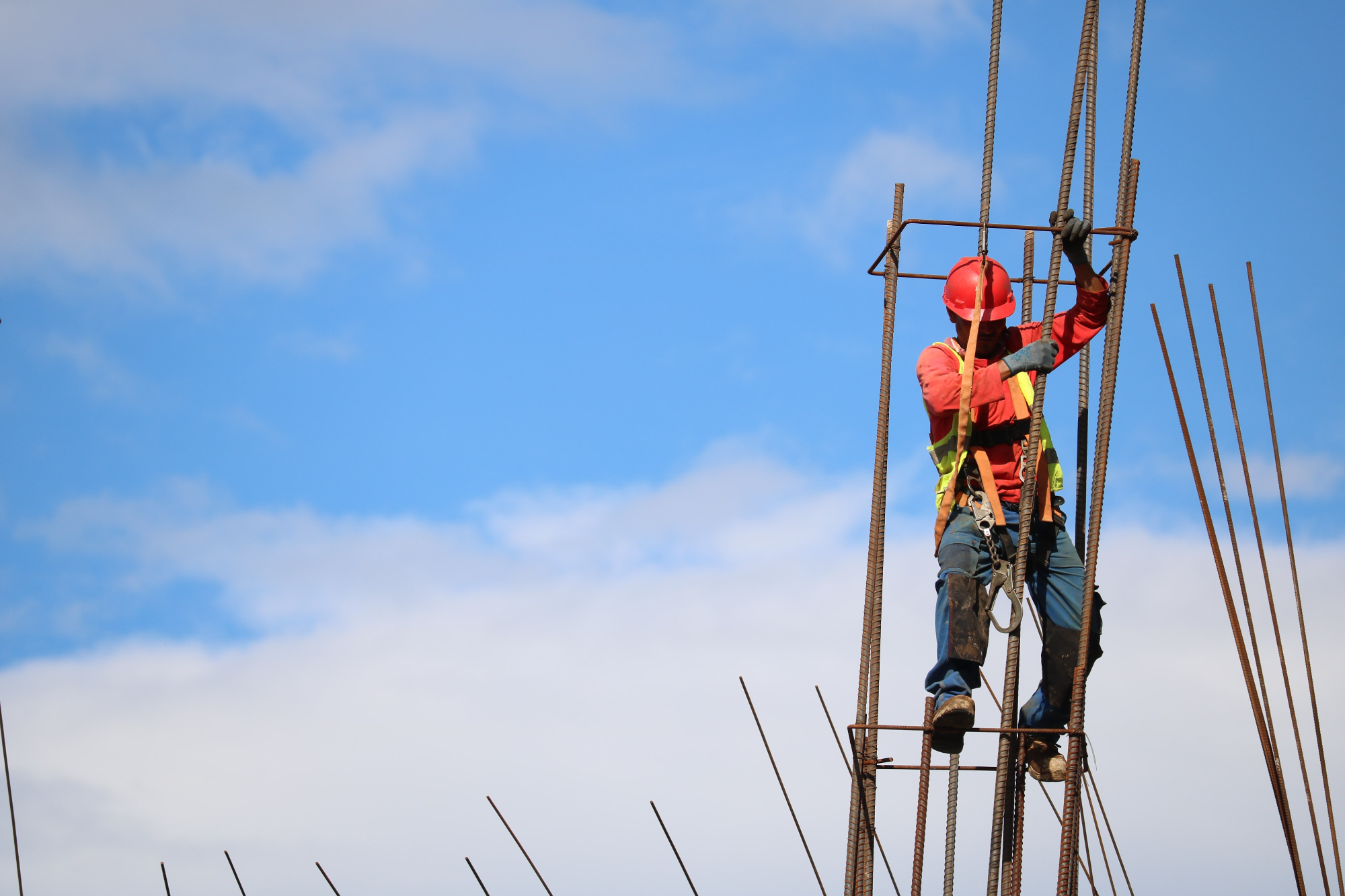
However, those manufactured or used before the year 2000 must be approximately 36-45 inches. Extra precautions can also manifest in the form of PPE, such as wearing hardhats, gloves, thick steel-toe boots, goggles, etc.

Maintenance
Screw legs, ladders, brackets, trusses and braces need to be examined routinely to ensure they are strong and in good condition. Should you find any damaged or weak equipment, it must be immediately repaired or replaced with more high-quality, working equipment.
Materials
You must invest in a high-quality plank-grade material or a robust and accurate equivalent that will allow you to ensure your scaffolding platform surfaces or solid panels are tightly planked together.
The construction industry are always developing newer and safer methods and materials that allow engineers and builders to complete work in less life-threatening or risky ways.
Scaffolding Inspection
On-site, it is essential to appoint what's known as a 'competent person,' who will thoroughly check and inspect the scaffold components and mechanisms involved for visible defects.
They must be capable of identifying existing and predictable issues with your structure, informing you to take prompt corrective measures to eliminate such problems.
Your competent person must be qualified and have undergone the proper training and years of experience to perform such an accurate analysis. At pre-determined horizontal intervals, your appointed and qualified person must re-inspect the equipment and scaffolding.
At any point, minor shifts or alterations could occur and pose severe threats of danger to your workers and builders.
Rigging Inspection
The rigging included in all suspension scaffolds on your construction site must go through routine inspections by a professional or competent individual before every work shift, morning or night. Professionals must repeat the inspections as they cannot afford to risk accidents or accidental contact with falling objects or hand tools. Connections must be tight; otherwise, the structural integrity of your scaffolding will not be considered safe and can be drastically affected.
You must ensure there is no damage to the rigging before, after and during the instalment. Investing in high-quality rigging can often mean that you will have better materials that are stronger to handle materials and such heavy loads.
Rigging Protection
It's paramount that all synthetic or natural ropes involved in your construction project for the proper use of suspension scaffolding setups are thoroughly monitored. You must ensure that operators or a competent person can protect it from heat-producing machinery to avoid lighting on fire and other harmful sources.
Diagonal Braces Instruction
All employees on your construction or project site are legally required and obligated to be thoroughly trained and tested on the area's surrounding hazards and the dangers of using diagonal braces as a form of solid fall protection.
Access
The scaffolding employees erect for your project must be thoroughly accessible through the means of ladders and stairwells, perhaps even by lifts, if your building can offer such. All scaffolds in the hazard area must be accessed via a sturdy platform or level, not by unsteady objects, as this could cause numerous accidents.
Power Line Distance
All built scaffoldings must be erected approximately ten or more feet away from any dangerous electrical or energised power lines during the development of your building or renovation project to secure safe distances.
Having your workers complete their jobs beside or close to live electrical hazards is too much of a risk, primarily if they work with metal tools of conductive materials and machinery.
If you are working on a construction project in Suffolk, Cambridgeshire, Hertfordshire, Kent or London, you will be considring the safety requirements of your workers. Follow the links below for construction site safety nets, crash bags hire and edge protection hire.
Fall Arrest Netting Kent Fall Bags Construction Kent Edge Protection For Height Kent