
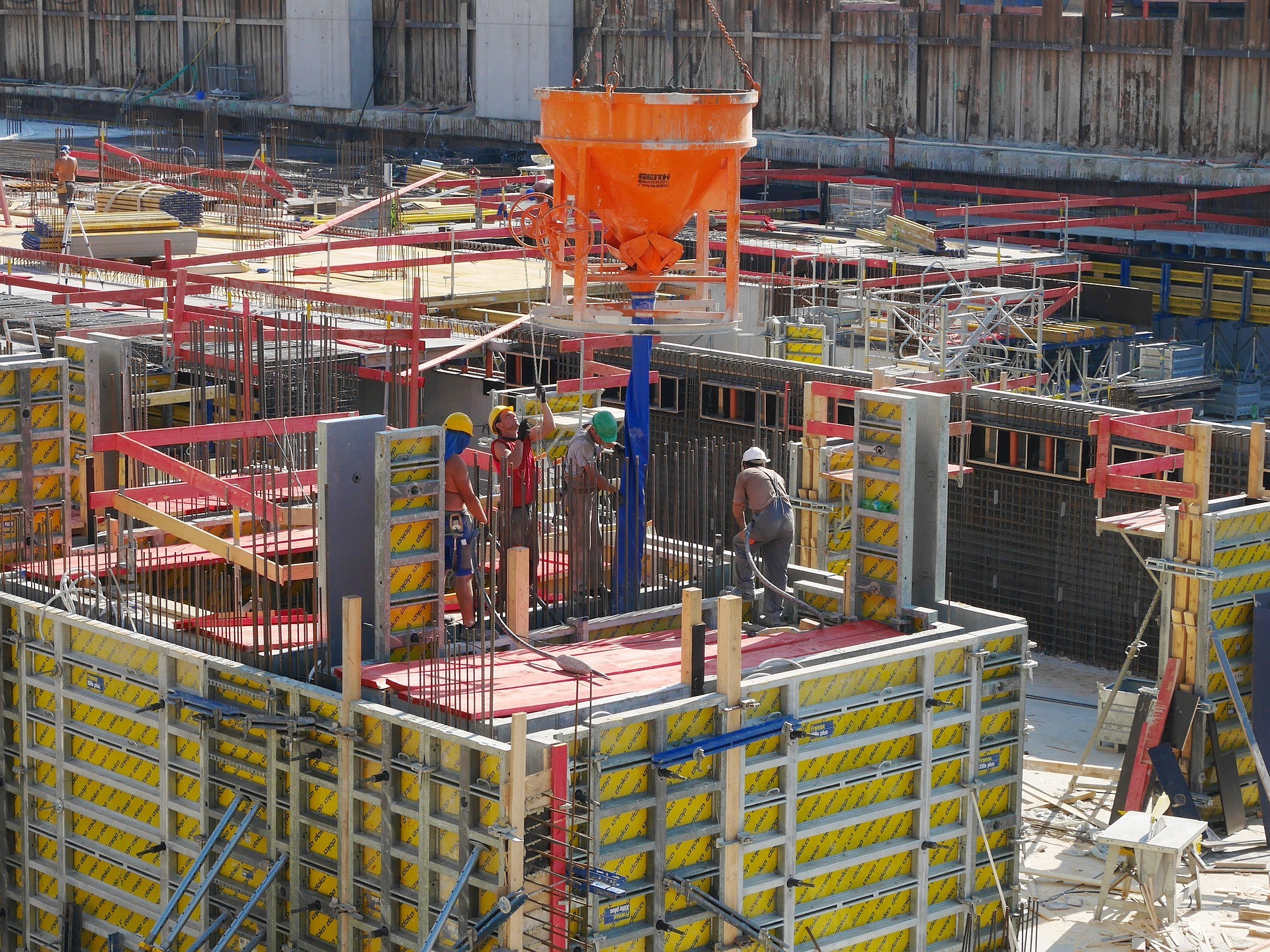
This article looks at the top hazards on a construction site. Pro Netting Solutions offer fall arrest nets supply and installation throughout Suffolk, Cambridgeshire, Hertfordshire, Kent and London. Find out more about construction hazards and hazards from working at heights.
Construction Site Hazards
A construction site is a plot, structure or land where buildings, infrastructure or roads are actively being renovated or throughout various stages in the construction process.
Workers and builders will often be subject to various hazards due to constantly operating plant machinery, heavy equipment, overhead lifting equipment and large tools, and even doing so at height or in environments with other dangerous machinery or suspicious materials.
Main Hazards From Working At Heights
Working at height is one of the industry's most common construction issues and causes of death and fatal injuries to builders and several thousand construction workers in the UK. The Health and Safety Executives (HSE) drew from statistics and estimated that approximately 47% of the fatalities occurred due to a fall from heights whilst working.
You require suitable training and qualifications to work at height and utilise numerous types of equipment and machinery whilst on platforms or scaffolds, and project managers must plan everything accordingly. Some safety precautions and approaches we highly recommend adopting include:
Avoid working at height until it is absolutely necessary. Avoid working during cold temperatures or bad weather conditions if at all possible; if not, provide as much protection as possible.
Provide a safety net as a means to minimise the consequences of a potential fall. Your workers should wear safety harnesses and other appropriate PPE (Personal Protective Equipment), such as high visibility jackets, helmets, gloves, steel-toed boots, etc. Do double-checks to ensure helmets and harnesses are worn correctly.
Provide extra varying levels of safety in the form of fall prevention, such as scaffoldings with edge protection or double-guard rails.
TOP HAZARDS IN CONSTRUCTION SITES
The purpose of construction site rules and safety legislation is to minimise the potential risks, machine and equipment failures and human errors that could lead to fatal injuries and even death. The points below state some of the most commonly found and encountered risks on job sites as dangerous as those used in construction work that you must consider when drawing up your risk assessments.
AIRBORNE & MATERIAL EXPOSURE
Construction workers are always at risk of respiratory hazards and toxic materials as they commonly face such dangerous materials and waste collection every day on the job; some of these include:
Lead: Construction workers can easily absorb lead from inhaling its mist, fumes or contaminated dust. Lead is usually found in cornices, paint, roofs, tank linings or any electrical conduits.
Asbestos: Workers can experience asbestos entering their bodies or respiratory systems when they ingest airborne particles that have been contaminated, which could trigger painful attacks, especially in those with asthma or more severe conditions.
Asbestos kills as it can lead to lung cancer. We're lucky that many modern products are made of or contain asbestos; however, if your job or project involves working with or renovating older structures and even demolition work, your employees may be at risk of extreme exposure to asbestos.
Chromium: Construction staff, designers and builders may encounter chromium mist, fumes or dust through their skin or eyes when they use or work with certain dyes, inks, plastics, paints, primers or surface coatings.
They can also be at risk of ingesting hexavalent chromium by welding stainless steel. Past exposure can also make issues flair up should you come into direct contact with its fumes again. Welding fumes can also result in Chronic Obstructive Pulmonary Disease, another lung condition that can affect your breathing.

FALLING
OSHA (Occupational Safety and Health Administration) states that the most common and largest number of construction industry fatalities result from a fall from height. Such falls can occur for multiple reasons, such as failure to utilise professional fall protection equipment, human errors or misuse.
Falls and accidents arise through numerous means in various situations; one of the most common instances is whilst workers are utilising ladders. Ladder falls are often due to using the wrong form of ladder to complete a task or improperly used ladders by those who have yet to be efficiently trained.
In the construction industry, 24,882 injuries and approximately 35 worker fatalities occur from ladder falls a year, and these can also be a result of:
- Structurally damaged ladders that are missing cleats, rungs or steps, or those that have bent side rails or are missing safety devices that hold them together.
- When those using the ladders carry equipment weights beyond their maximum load or when more than one person uses the ladder at once.
- Dangerous distractions occurring elsewhere.
- Metallic ladders that are too close to power lines or used during electrical work.
- Ladder slips due to rung contaminants that aren't fully secure and lack good grip.
To prevent ladder falls and comply with the regulations and OSHA standards, we highly recommend frequent inspections from a competent person to ensure manufacturer guidelines are followed.
SLIPPING & TRIPPING
As a worker, you'll find that construction sites can be a wildly busy, ever-changing environment, complete with a maze of debris, dirt and vital equipment. You can slip and trip when trying to navigate such building sites. There are specific OSHA-granted definitions of slip and trip throughout the construction industry.
A slip is recognised as a loss of balance due to a lack of friction on a work surface; trips, on the other hand, due to an employee's foot or lower leg catching or hitting an object that causes a lack of balance. Slips, trips and falls occur in a multitude of ways, especially on stairways; OSHA and the HSE report that they include the following:
- Stairways or platforms complete with dangerous objects, materials or debris that make manoeuvring challenging, which is why it is essential to keep work and storage areas tidy.
- Areas or staircases that aren't cleaned and dried quickly, so they stay slippery.
- Stairway treads that do not efficiently cover the access routes, landing or entire step.
- Finally, high platforms or stairways with four or more risers over 30 inches of height that do not provide handrails can also cause problems.
STRUCK-BY INCIDENTS
Getting struck by falling or flying equipment, supply vehicles, and heavy materials can be another significant hazard. According to statements from OSHA, approximately 1 in 4 construction worker deaths are caused by being struck by a moving vehicle; 75% of those fatalities typically involve cranes, trucks and various other heavy equipment. Such incidents may be due to the following circumstances:
- When workers are pinned between walls and construction vehicles
- If a worker gets struck by swinging backhoes
- When workers get struck on-site by cars or trucks while working on the job
- When workers are crushed beneath vehicles that have been overturned.
EXCESSIVE NOISE
Plenty of the ground working equipment utilised on a professional project or construction site curate extreme noise levels. Those exposed to loud noises long-term can have irreversible hearing loss, so construction workers are always at risk.
A single explosion or repeated exposure to noises at a moderate or deafening level over time can cause hearing loss within the field.
The Occupational Safety and Health Administration (OSHA) states that eight-hour exposure to high levels of noise that extend over 85 decibels can be detrimental to your hearing and cause damage.
One hundred decibels per hour a day can cause long-term hearing loss. We suggest completing a formal and comprehensive noise risk assessment for all your tools, and this may help efficiently and effectively divide up each worker's time on each task.

SCAFFOLD-RELATED INJURY
Suitable scaffoldings of the highest quality can enable approximately 2.3 million construction workers on extremely tall buildings and landmarks to complete their work safely. On the other hand, scaffolds can present various safety hazards and cause injuries if installed improperly or misused. Some of the risks at hand include the following:
- Fall from great heights because of a lack of fall prevention or protective gear.
- Scaffoldings can collapse because of extensive overloading of workers, materials and equipment or structural instability.
- Debris, work materials or vital tools could fall from the scaffolding and hurt a bypasser or worker below.
- Scaffold planking or the supports could give-way.
- The proximity of the scaffolding to overhead power lines could result in electrocution.
VIBRATION-RELATED INJURY
Long periods of construction equipment operation can expose your qualified electricians and workers to high vibration levels that could put them at immense risk of shocks, burn injuries and ill-health. The vibration in the usually uneven terrain they drive over and the on-site equipment can transmit numerous vibration levels through their cab and frame. These can result in full-body vibrations, especially when using vibrating tools. Such vibrations are uncomfortable and can cause numerous health risks and issues that could become detrimental if not given medical attention. You may experience the following:
- Lumbar spine and nervous system irritation in your blood vessels, nerves and joints.
- Speech modulation issues.
- Internal disorders with your organs.
- Alterations in body movements.
- Musculoskeletal injuries primarily centred around your arms, shoulders and neck, such hand-arm vibration syndrome.
ELECTRICAL INCIDENTS
Construction projects and engineering work of any kind will typically involve electrical systems and equipment, machinery or products that present various electrocution hazards and the potential to be shocked if misused. Electrical hazards are always a risk; suppose you are partaking in a project near or uncomfortably close to buried or overhead power lines.
Such power lines carry high wattages and voltages of electricity that, when workers touch them, can result in burns, falls or severe electrocution. You'll also find that electrical equipment close to the scene can create hazards due to them becoming active.
Ensure that all electrical equipment or handheld power tools are connected to a ground-level power supply and not broken. That could allow a current to travel through a worker's body and create a dangerous electrical burn.
Falsely utilising equipment that opposes what is stated in the manufacturer's recommendations is a surefire way to end up with a series of damaged tools and machinery and a potential fatal injury.
Suppose you use flexible or extension cords and trailing cables in extensive amounts or improperly compared to what professionals recommend. In that case, you could face the risk of contracting burns or shocks via hazardous electrical currents. Underground power cables need to be looked at closely for any significant issues.

BURNS
Sometimes, you may find yourself lucky enough to treat minor burns on your project or working sites with the help of simple first aid kits; however, more severe and painful burns have long-lasting effects that are debilitating in some cases. It is vital to ensure that highly trained medical professionals treat them. Many burns that your engineers, builders and operating staff may suffer from can be a result of hazardous electrical incidents, and some of the other causes can include the following:
- Flash or arc burn from welding equipment.
- Coming into contact with a toxic mixture of hazardous materials and airborne fibres, or more so chemicals.
- Thermal contact burns are a result of touching incredibly hot objects or machinery.
MANUAL MATERIAL HANDLING
Storing and handling materials at a storage or construction site can be a significant hazard when not effectively managed. Material handling is a part of the construction industry that typically deals with your equipment's mechanical and manual handling. You may find your workers suffering or becoming injured while material handling, especially when performing such jobs manually, in the following scenarios:
- If your workers struggle to grasp or lift a load efficiently.
- If your workers fail to see over or around the loads they are carrying.
- Your workers cannot handle a load safely and have to utilise unsafe means to do so.
- Your workers frequently perform repetitive movements without proper form, intermittent breaks or the correct posture. Doing so can lead to lots of spraining or severe strains.
If you are working on a construction project in Suffolk, Cambridgeshire, Hertfordshire, Kent or London, you will be considring the safety requirements of your workers. Follow the links below for construction site safety nets, crash bags hire and edge protection hire.
Construction Fall Safety Nets Kent Fall Arrest Bags Kent Edge Protection Hire Kent